What the Watermark Shows and What It Won’t
Every AI watermark answers the question "what made this?" but none of them can say who.
Research and editing assistance provided by Claude. Feature image created with Midjourney.
That line, or one like it, appears in the footer of every article I've published on this website. I'm under no obligation to disclose it, but it's the least I can say about how my posts are made in an effort to be transparent.
Since 14 August, there has been a second disclosure, but it's completely invisible and I had no say in it. Anthropic, the company that makes Claude, now adds a hidden watermark in the text Claude writes. That includes the first draft of this post. But I have no way to check it, because Anthropic's detector is only available to a small group of regulators, newsrooms, and researchers.
More recently, Google, OpenAI and Apple have each announced new ways to mark or check where files come from. So Claude and I held my files up to the light, the way you'd check a sheet of paper for a watermark. If you're curious how the marks work, from a papermaker's wire in 1282 to the detectors anyone can try today, watch the 3-minute video below that I made with Claude. The last line of the video is the one I want to dig into in this post.
Every one of these marks can trace a file back to the tool that made it. What's still missing is a way to trace it back to the author.
A signature without a name
The reason watermarks don't say anything about the author is deliberate. Apple has argued against Content Credentials, the signed records some cameras and AI tools attach to files, because they can tie a photographer to a public identity which can be a risk for some. OpenAI also says its new text watermark doesn't identify the user. In 2024 it held back an earlier version of the technology, citing among other reasons the risk of stigmatizing non-native English speakers who write with AI's help. A mark that names the person would also expose them. For now these companies are choosing privacy.
An inspection of my own files created for this essay and the accompanying video shows what this looks like in practice. Every time Claude saves a picture or a sound file to my hard drive, regardless of where it originated, the software adds a credential of its own to the metadata:
Claude provided this file at the request of a user and may have created or modified the file contents.
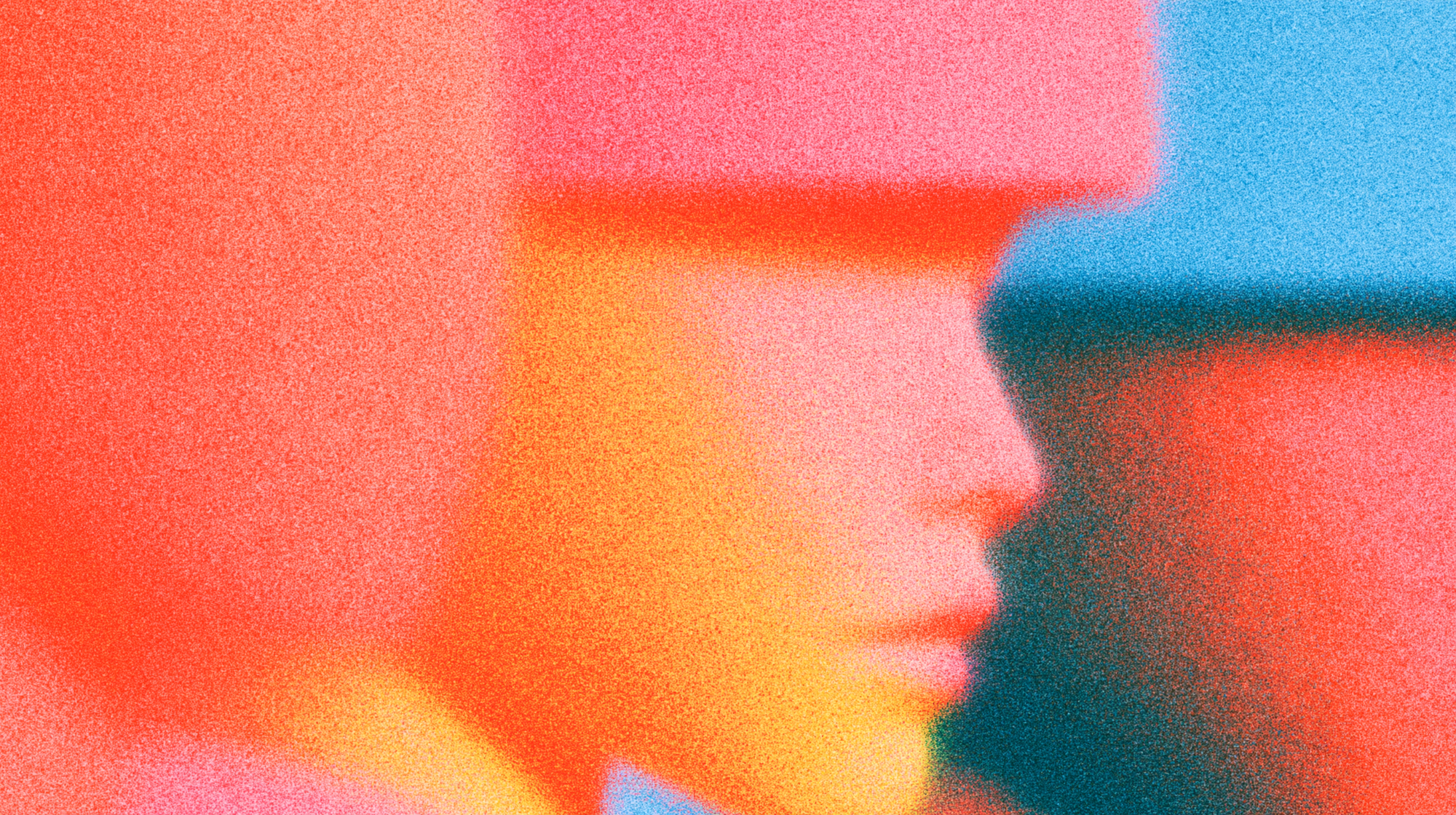
It never says which user. The only names in the files are account handles in plain-text fields anyone can edit: "lookdeeper" in a Midjourney picture, "cspin" in a song made with Suno. The only thing that looks remotely like a signature was painted in by AI: in the corner of one Midjourney picture I recently generated, it added a photographer's credit that, as far as I can tell, doesn't belong to anybody.
Legal protection demands a person
Copyright is where leaving the person out has a cost. In the United States, a work requires a human author for it to be protected. The Copyright Office's January 2025 report says AI output qualifies "only where a human author has determined sufficient expressive elements," and that "the mere provision of prompts" isn't enough. Using AI to assist, it adds, "does not bar copyrightability."
The line has already been drawn by the US copyright office. In 2023 it registered Zarya of the Dawn, a comic illustrated with Midjourney, for its text and the arrangement of its pages, but refused the images, which it indicated "are not the product of human authorship." Anyone registering a work now has a "duty to disclose the inclusion of AI-generated content" and to give "a brief explanation of the human author's contributions." In March 2026, the Supreme Court declined to hear Stephen Thaler's appeal, leaving in place the ruling that a picture his AI system made on its own can't be registered at all.
The line falls somewhere else in Canada. SURYAST, a photo restyled after The Starry Night by an AI app called RAGHAV, was refused in the US in December 2023. But in Canada it's registered, with the app named as co-author, though a legal clinic's challenge to that registration is still waiting for a hearing.
So the marks are built to leave the author out, and copyright law requires the author to prove they're in. No watermark helps with that, and neither does the newest kind of proof: in November, researchers at Anthropic and EPFL demonstrated that a provider can actually prove which AI model answered which prompt. The prompt is the only part of my contribution it would capture, but prompts, according to the Copyright Office, aren't enough. In the end, the only record of which parts are truly mine is the one I keep for myself.
What the audience sees
Most people will never run a detector. In a blind test Deezer ran with Ipsos, 97% of listeners couldn't pick out the music made with AI, and the studies I reviewed for What We See When We Look found that a label changes how people judge the work. For many audiences, the label is the whole story.
The detectors don't address this issue. Each one can only detect the marks that its own company's software, or its partners, added to the file. Two songs I tested that were made with Udio slipped through all three detectors I tried, and Udio doesn't have one of its own. OpenAI, when announcing its text watermark, put it in perspective:
The absence of a detected watermark does not prove human authorship.
The music industry's answer to this is a voluntary badge, either "AI-Generated" or "AI-Assisted," to be declared by labels and distributors. Europe's solution is a legal requirement: since August, the AI Act has required deepfakes (images that portray real people, places, or events) to be clearly labelled. In June the European Commission released free badges for content creators to use – either "AI GENERATED" or "AI MODIFIED," – though using the provided designs is optional.
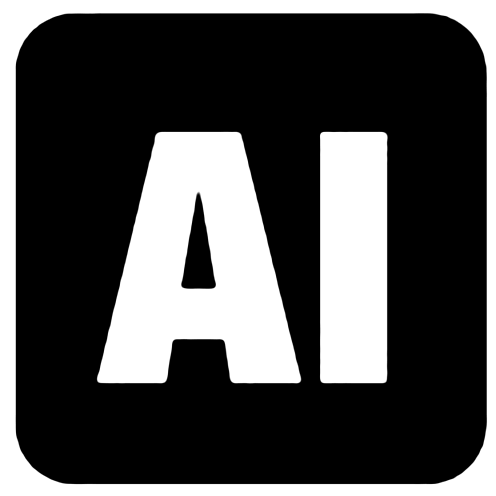

Top: the music industry's labels, as IMPALA announced them. Bottom: the European Commission's badges, free for anyone to use.
The problem with both solutions is they fail in opposite directions. The embedded mark alters the thing it marks, but tells the audience nothing. The badge on the other hand leaves the work untouched, but tells the audience everything before they've heard or seen anything.
A record and a card
Claude initially drafted this essay based on our tests and conversations, and I edited it. It then went through several revisions as I had additional insights and thoughts to integrate. If you were to compare the original draft and the final version, it would show who typed each sentence. But it wouldn't tell you whose idea was whose, and some of these sentences have passed between us so many times that neither of us could say where they started. Even so, a record like that is close to what the Copyright Office asks a maker for: a plain account of the human contribution, written by the human.
The film industry settled a similar version of this problem back in the 1930s. In 1932, MGM's Rasputin and the Empress opened with a card presenting its story as history, noting that "a few of the characters are still alive." Princess Irina Yusupov then sued MGM for libel and won, and the case is widely credited with popularizing the "any resemblance to actual persons is purely coincidental" disclaimer that still runs in film credits today. That card describes the work itself. It tells an audience what kind of thing they're about to watch.
Anyone who makes things with AI can, and probably should, do both: keep the record for yourself, and write the card for the audience. Mine would say:
This essay and accompanying video are based on sourced facts. Both were written and edited by Claude and I over a series of conversations. The tests are real, dated, and were run once. The pictures, voices, and music were made with AI tools. Everything was reviewed and approved by me prior to publication.
At the end of the day, the audience doesn't need to know how the artwork was made, but sometimes it provides an additional layer of context and can actually add to their appreciation. When I was a kid I used to obsess over books that showed the process of making the films I loved. Knowing how the magic was created didn't detract from my appreciation, it enhanced it. At some point in the future, I imagine some people will feel similarly about how today's creators are making magic with AI. Until then, it's up to the author to disclose what they feel is appropriate.
Research, writing, and editing assistance for this essay provided by Claude Opus 5.5. Feature image by Midjourney 8.2. "Held to the Light" video was made by Claude, using images made with Midjourney, and music and voices made with ElevenLabs.