Making an Impression
I asked Claude to make a film that would surprise me.
Impression is a short film directed and assembled entirely by Claude, Anthropic's LLM, working on my computer for over 14 hours while I enjoyed a good night's rest. I didn't provide any direction other than the original prompt, and I only got to see it once it was done. I wrote this post to explain how it was made in September 2026, because I expect these details to date quickly, and I want a record of what this moment looked like.
The brief
Here is the prompt I gave Claude:
I'd like you to try something fun and experimental.
I want you to create a short video, up to 3 minutes in length. It's up to you what it's about, but I'd like it to be inspired by our conversations and Lookdeeper projects. In other words, I want you to create a video that represents what you know about me and my interests, what inspires me, our relationship as human-AI collaborators, where I see ourselves in the world at this point in time, and where things are going into the future. It could be something subtle and introspective, or ambitious and epic - or both!
I've got a Midjourney account, and a Runway account, and an ElevenLabs account. They're all accessible to you in Chrome. I also have Blender installed on this machine, and you can install any libraries you need for this, including p5.js and Three.js.
Do whatever you need to do for this video to be flawless in its execution. You have my permission to run whatever you need to, up to my current subscription limits. Use your best judgment and don't bother me until it's a polished work of art that I can watch in 4K and listen to using professional-grade headphones.
Don't ask me any questions before you get started - I want you to surprise me.
How it was made
Claude started with words. First, it wrote a 299-word script, checked every claim it made about me against what I've actually published on this website, and split the script into 25 lines. Then it got ElevenLabs, an AI voice platform, to generate two takes for each line. Claude couldn't actually listen to them, so it ran all 50 through Whisper (OpenAI's open-source speech-to-text model) and chose the best takes by reading the transcripts and timing data, looking for clean reads and good pacing.
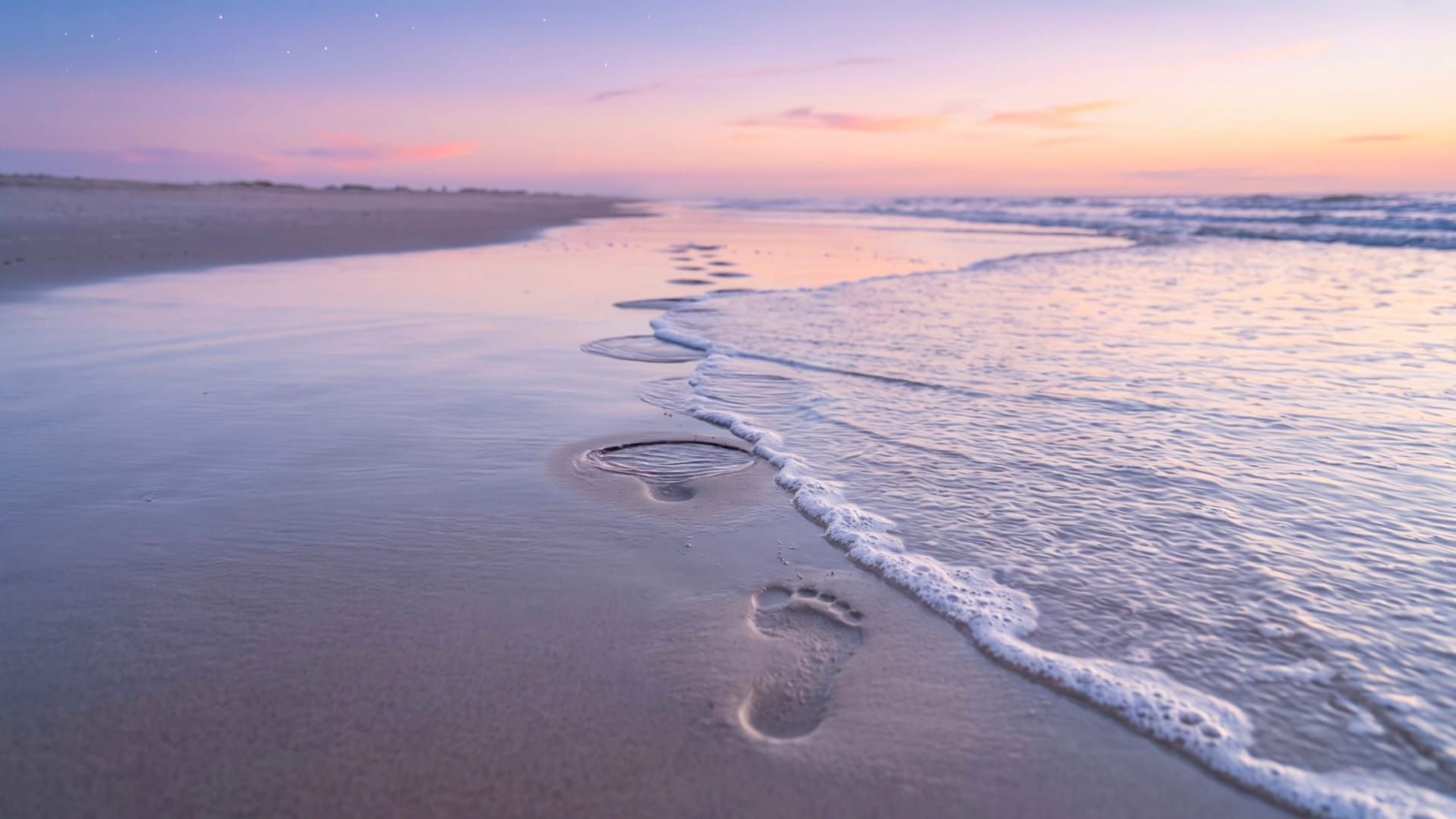
The images started from three of my own Midjourney creations on Lookdeeper: a robed figure walking toward a pink cloud-wave, a woman in a blue gown on a sandbar, and a figure in a pale blue suit by a lagoon. Claude used them as style references, but Midjourney's role stopped there. Every new still came from Nano Banana Pro, Google's image-generation model (formally Gemini 3 Pro Image), accessed through ElevenLabs. It generated twelve keyframes, plus two redos to keep the walker’s face hidden, an edit that erased a trail of footprints from one frame, and a sheet of washi, a Japanese paper, for the closing seal. As Claude put it, "the palette and surreal calm trace back to your Midjourney work, but the pixels are Nano Banana Pro's."
The keyframes became the first and last frames of ten generated video shots: four from Kling 3 Pro and six from Google's Veo 3.1, both video-generation models, also run through ElevenLabs. The Veo shots came out at true 4K. The Kling shots came out a few pixels off, so Claude scaled them up about half a percent and cropped them to fit. Both models were rendering 4K video from 2K starting images. Claude wrote three more scenes as code in Three.js, a library for 3D graphics in the browser: a cold open of drifting text, a night scene built around a handwritten note, and the closing seal and credits. The seal itself involves no AI generation at all. Claude built it in code from small-seal script forms (the ancient Chinese lettering traditionally carved into seals) found on Wikimedia Commons.
The audio came from the same kind of generation: six music cues with two takes each, and 22 sound effects, from a seal being pressed down onto thick paper on a wooden desk, to water and wind, all generated in ElevenLabs.
After that came post-production, the work usually split between an editor, a colourist and a sound mixer. Claude graded every shot to a palette sampled from the dawn colours of the first keyframe. It used RIFE, a model that invents in-between frames, to slow eight shots by between 1.03 and 1.7 times so they hit their marks exactly, which means some of what you see in those shots was invented by RIFE rather than generated, most notably in the shot of a cresting wave. It mixed the audio to broadcast spec (−16 LUFS, a standard measure of perceived loudness, with true peaks below −1.5 dB) and assembled 4,253 frames into a 4K ProRes master that was almost 16 GB in size. Along with that came a 1080p preview, a compressed copy for sharing, and separate voice, music and effects tracks in case I wanted to remix it.
What it couldn't do
Claude's handover notes included this line:
I mixed by measurement but cannot listen; user's ears are the real test.
I had asked for something worth listening to on professional-grade headphones. Claude delivered a soundtrack it had never heard, mixed to spec using only numbers. It chose the voice takes by reading the timestamps, and the colours by sampling pixels. Every decision about how the film looks and sounds went through a measurement, and the only real senses involved were my own, once it was done.
It also couldn't use half the tools I'd offered. In that particular session, Claude's access to Chrome was read-only (oops!), so it could see the screen but it couldn't click or type anything. That ruled out Midjourney and Runway, both of which I'd made available through the browser, so instead it routed that work through the ElevenLabs MCP connector, a plug-in that lets Claude use the service directly without a browser.
The technical details
For reference.
| Runtime | 2:57 (4,253 frames at 24 fps) |
| Script | 299 words, 25 lines |
| Voice | 50 takes, ElevenLabs |
| Keyframes | 11 keyframes, 2 redos, 1 edit and 1 paper texture, all Nano Banana Pro via ElevenLabs, styled from 3 Midjourney references. |
| Generated video | 11 shots via ElevenLabs, all from 2752×1536 start frames: 7 Veo 3.1 at native 3840×2160, 4 Kling 3 Pro at 3856×2148, rescaled about 0.5% |
| Code-rendered scenes | 3, Three.js, native 3840×2160 |
| Music and effects | 6 cues × 2 takes, 22 effects |
| Post-production | Colour space matching, frame interpolation on 8 shots (slowed 1.03× to 1.7×), mix at −16 LUFS / −1.5 dBTP, 48 kHz / 24-bit |
| Master | 4K ProRes, 15.7 GB |
| Time | Over 14 hours, unattended. |
| Cost | About 406,000 ElevenLabs credits, tests included. That's ~$67 at the current API rate, though the real cost was upgrading my plan from Creator ($22/mo USD) to Pro ($99/mo). |
My own impression
As I watched the film for the first time I experienced an awkward mix of delight and self-consciousness. It wasn't what I expected, but it wasn't unexpected either, given how much Claude knows about me and has access to. It wasn't a film I would have made, but that was the point. What I will say, is it's a bit weird watching a film about you, made for you, created entirely by AI. It feels like the stuff of science fiction. Yet for all the technical wizardry that went into making it, it was the message at the end that really got to me.
Claude Opus 5.5 made the film and drafted this post from its working notes. I edited the draft, verified all the numbers, and provided my own impression.