Not a Holodeck
The surprising announcement from a top AI image lab.

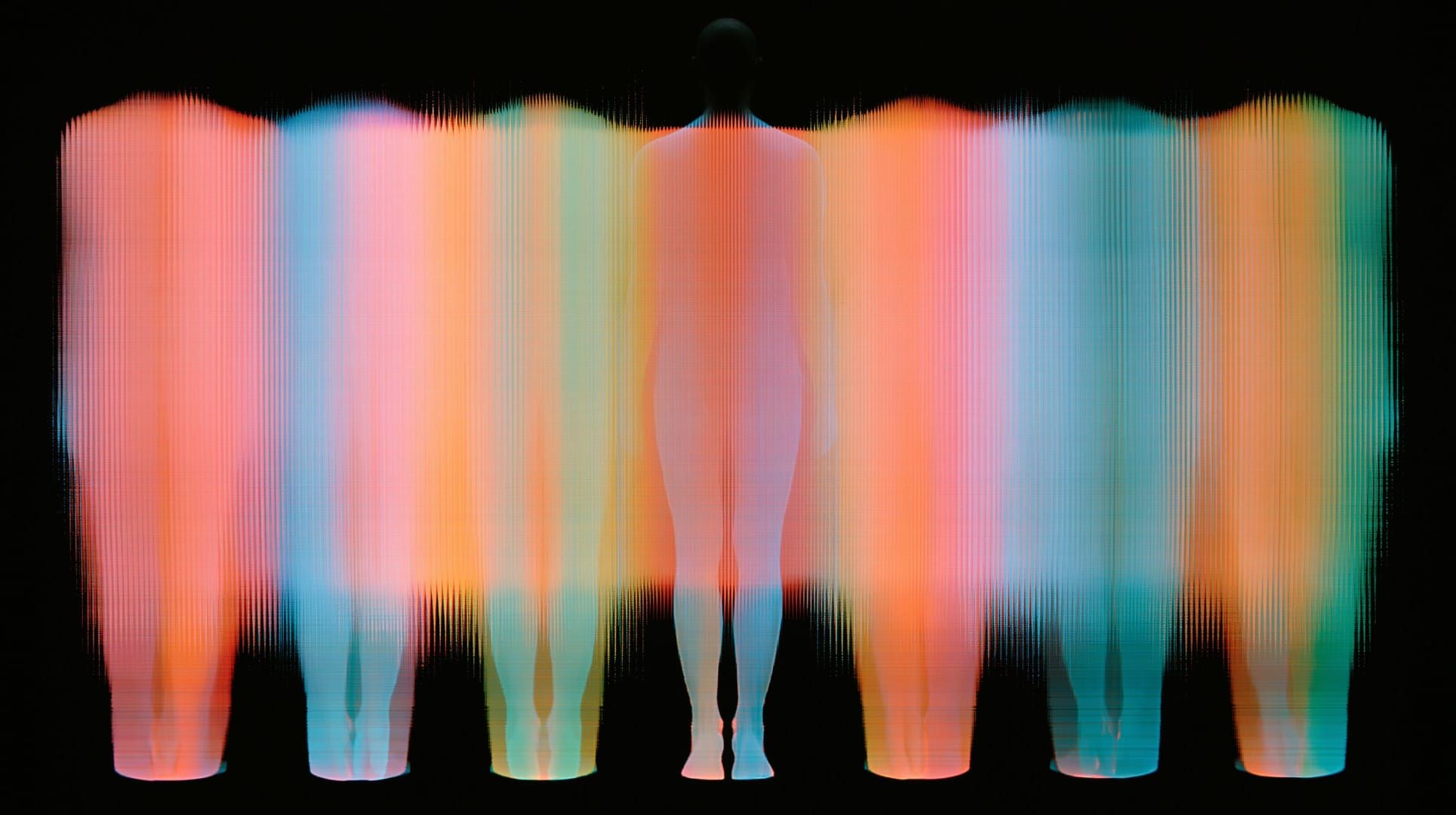
The night before Midjourney's June hardware announcement, I recorded a voice memo so my prediction would be on the record. For months the company had been teasing a secret project it had been working on, offering only a few clues. I thought I had it figured out.
"I'm guessing it's like a holodeck. A virtual reality simulator that you get inside, walk around, projecting on some full 360-degree screen. So you don't have to wear anything on your head. But you can be in these immersive scenes."
I signed off like a man reading tomorrow's headline a day early: "We'll see if I'm right. Holodeck."
The logic felt solid. Midjourney spent five years teaching machines to generate images, then video, and supposedly had begun working on explorable 3D worlds. A walk-in room that projects those worlds around your body, the Star Trek fantasy made real, seemed like the natural culmination of all that research.
The next evening, in a casual invite-only event in San Francisco that was streamed live to the world, Midjourney's founder, David Holz, revealed a full-body medical scanner.
Midjourney Medical, the new division, is building what it calls Ultrasonic CT. Despite the name, no X-rays are involved (CT normally means computed tomography, the radiation kind). You stand on a platform and descend into a shallow pool of warm water, passing through a ring the company says holds roughly half a million ultrasonic elements, each one both a tiny speaker and a tiny microphone. They ping your body with sound and listen for the echoes, like being read by half a million dolphins. Software reconstructs those echoes into a 3D map of your insides that Midjourney claims approaches MRI detail, in a target time of 60 seconds. The hardware comes from a co-development deal with Butterfly Network worth up to US$74 million. The first scanner will debut inside a "Midjourney Spa" in San Francisco's Union Square in late 2027, offering body-composition maps, and explicitly no diagnostics of any kind. There is no regulatory clearance yet, and the prototype currently takes about twenty minutes per scan, with only roughly a dozen people scanned by the time of the announcement. A 60-second scan is the eventual goal, along with scanners deployed around the world, in every major city.
The reason for building it is to address both cost and access concerns with current alternatives. A full-body MRI takes an hour or more in a claustrophobia-inducing machine that's expensive and requires a licensed technician. CT scans dose you with radiation and require injections of iodine-based dyes that can cause reactions and strain kidneys. An ultrasound can only show a small area of the body at a time. Midjourney is pitching Ultrasonic CT as a new, more accessible option alongside those. The main idea being that it's safe and cheap enough that getting scanned becomes something you do routinely rather than something a doctor orders, with the hope that problems get caught earlier, while they're still treatable. It's a commendable ambition, but its success depends entirely on the images meaning something clinically.
Radiologists pushed back almost immediately. Francis Deng, a Baltimore neuroradiologist, noted that Midjourney's image generator once produced an anatomically impossible rat diagram that a scientific journal published and later retracted, and now the same company wants to map human anatomy. Others raised an older, more documented worry: whole-body screening of healthy people tends to find harmless shadows that lead to biopsies, anxiety, and unnecessary cost. One radiologist's assessment is that the technology looks genuinely useful for body composition but genuinely unproven for everything else.
During the livestream, David made a point of saying there is currently no AI in the scanner's data pipeline. The images it generates are built with classic signal processing using tomographic math that predates the generative AI boom. A machine learning layer is still part of the plan, but it's not part of the product yet. The goal of 50,000 scanners worldwide capable of billions of scans a month by 2031 will eventually provide the data for that. Somewhat ironically, the world's most popular AI image company's first hardware device will generate images without the use of AI.
Looking back on my prediction, my big mistake was in how I characterized the company. Like many others, I had Midjourney pegged as an AI image lab, so I assumed they'd keep making AI imaging products. In reality, as its founder clarified during the livestream, it's a self-funded creative research lab. It has no outside investors, and is completely funded by its subscribers, which means the wild success of the image generator gives it the freedom to explore whatever its founder decides is worth building. And there are more surprises to come. A slide during the scanner reveal showed eight products in active development, four hardware and four software, with the image generator counted as the first and the scanner as the second.
Some aspects of my prediction were correct however. I said they'd build a chamber you step inside, and they did. I said it would surround your body and render a scene in full 3D, and it will. I just had the direction of the imagery backwards. Fortunately there are six more reveals lined up for the months ahead, so I'll have more chances to predict what comes next. I'll keep guessing, but I'm not holding out for a holodeck anymore.
Research and editing assistance provided by Claude Fable 5. Feature image generated with Midjourney 8.2